Publikation
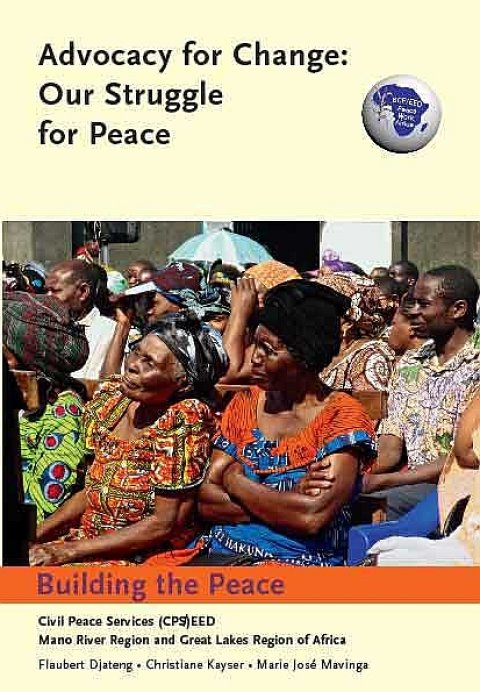
Advocacy for Change: Our Struggle for Peace
In recent years, advocacy has become a key word in development work and peace building initiatives. We have decided to move beyond the ‘buzz words’ and instead pull together some case studies and lessons learned from various advocacy initiatives of the “Civil Peace Service, EED”. We will present some of the main concepts of this work and outline some of the fundamental tools that have been developed by other actors and stakeholders as well as by ourselves in the hope that they will bring added value and increased efficiency to your advocacy initiatives. The first step is to define advocacy. For the purpose of this study, we have identified some central characteristics of advocacy, as well as what advocacy is or what it could be:
- Action against injustice and exclusion
- Action towards mobilisation and empowerment
- Action around negotiation and dialogue
- Action of stakeholders becoming actors instead of remaining victims
Sustainable change on the African continent can only come about if it is initiated by the African people and done in participation with them. Advocacy work and peace initiatives do not relate only to the activists and decision makers involved in the activities, but equally to the millions of people directly affected by poverty, social injustice, wars and natural disasters We must use our skills and play our role with mutual respect for the big task that lies ahead.
Contents:
1. Introduction
2. Definitions
3. Three Approaches to Advocacy
4. Principles Developed through Work in the Democratic Republic of Congo
5. Advocacy and Power
6. Why and When to Engage in Advocacy: Experience from the Council of Churches in Sierra Leone
7. Check Points
8. Experiences and Obstacles: Examples from the Civil Peace Service/ EED in the Great Lakes Region
9. The North – South Dilemma: Committment to Women’s Rights and Obstacles to Efficient Advocacy
10. Challenges of Advocacy
1. What are the issues and how to bring about change?
2. How to describe the issue and the key actors?
3. What are the common and opposing interests?
4. Identifying allies. Identifying opposition
5. How to engage in productive dialogue?
6. How to seize opportunities
11. Advocacy Tools
12. Conclusion
See as well: French version